The Ultimate Showdown: Ugreen Nexode Power Bank 20000Mah 165W vs Google Pixel 10 for 2026
Introduction
In 2026, conversations about mobile performance often center on two interlinked questions: how capable is the smartphone, and how reliably can it stay powered throughout a busy day? The Ugreen Nexode Power Bank 20000mAh 165W and the Google Pixel 10 represent two different but complementary sides of that problem. One is a high-capacity, high-wattage external battery designed to keep phones, laptops, and other devices running; the other is a modern flagship smartphone designed for photography, AI-assisted features, and everyday productivity.
This article takes an editorial, real-world look at both products and—importantly—how they pair together for a typical 2026 buyer. It covers detailed analysis, practical use cases, the strengths and weaknesses of each, a direct comparison table for quick reference, and a buying guide that helps readers decide who should buy which product or whether both make sense as a combined solution.
Product Overviews
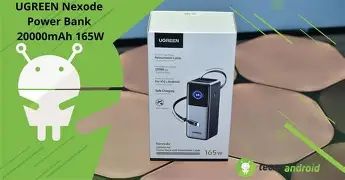
Ugreen Nexode Power Bank 20000mAh 165W — What it brings to the table
The Ugreen Nexode 20000mAh 165W is a premium portable charger aimed at users who need serious wattage and capacity in a single package. With a 20,000mAh cell pack, it targets power users who carry multiple devices—phones, tablets, laptops, cameras—and expect fast recharge cycles when away from outlets.
Key functional themes of the Nexode are high-power delivery, multi-device charging, and safety. At 165W maximum output (combined across ports), it can feed high-draw devices such as large laptops or multiple fast-charging smartphones simultaneously. It also focuses on modern charging standards like USB Power Delivery (PD), which ensures compatibility across a broad range of devices.
For everyday users this means the Nexode can serve as a weekend travel companion, an emergency backup during outages, or a mobile workstation booster for remote work. For creators and business travelers who pair a flagship phone like the Google Pixel 10 with a laptop, the Nexode aims to be the single accessory that keeps the workflow moving.

Google Pixel 10 — The modern smartphone centerpiece
The Google Pixel 10 continues Google’s approach to a clean Android experience with an emphasis on computational photography, on-device AI features, and long-term software support. As a 2026 flagship, the Pixel 10 is designed for users who prioritize camera quality, timely updates, and tight integration with Google services.
Buyers typically care about battery life, camera performance, screen quality, software features, and ecosystem compatibility. The Pixel line traditionally balances high-end camera systems, efficient silicon, and software that leans on AI to enhance photos, voice interactions, and smart features. In practical terms, the Pixel 10 is likely to be the primary daily driver for communication, entertainment, navigation, and content creation.
Detailed Analysis and Real-World Use Cases
Charging performance and compatibility
Ugreen Nexode: The standout feature of the Nexode is its ability to deliver high wattage. Users who carry power-hungry laptops and a flagship phone can charge both simultaneously—something many smaller banks can’t handle. Compatibility with USB Power Delivery means it will negotiate appropriate power profiles with modern phones, including the Google Pixel 10. For someone editing photos on the go or running video calls on a laptop, the Nexode reduces the need to find a wall outlet.
Google Pixel 10: The Pixel 10’s charging behavior matters in two respects. First, how quickly it accepts a charge; second, how long its battery lasts under real-world workloads. Most flagships in this era prioritize faster top-ups rather than ultra-rapid bursts that degrade long-term battery health. When paired with the Nexode, the Pixel 10 will benefit from sustained fast charging and the convenience of multiple top-ups through the day without waiting for a wall socket.
Discover deals on Mobile Phones — updated daily.
Browse Now →Portability and daily carry
Ugreen Nexode: A 20,000mAh pack is larger and heavier than pocket-sized power banks; users should expect to carry it in a bag rather than a pocket. That said, the Nexode is designed with travel and everyday carry in mind—smaller than many laptop chargers while offering higher cumulative energy. For commuters, conference-goers, and weekend travelers, the trade-off between weight and capacity is usually worthwhile.
Google Pixel 10: The Pixel 10 remains a pocketable powerhouse. Its form factor is optimized for one-handed use, photography, and long sessions of messaging or media consumption. The ideal pairing is a phone that can be quickly topped up with the Nexode during downtime (train rides, coffee breaks) so it never becomes the bottleneck in a busy day.
Durability, safety, and travel considerations
Ugreen Nexode: Safety is critical for high-capacity power banks. The Nexode includes multiple protections—overcurrent, overvoltage, temperature control—to protect devices. Buyers who travel by air should note that a 20,000mAh bank is typically below common airline limits (100Wh) and is therefore allowed in carry-on bags on most carriers, but they should always check specific airline rules. The Nexode’s ruggedness under repeated use and thermal performance during simultaneous high-output charging are practical considerations for heavy users.
Google Pixel 10: Smartphone buyers care about durability and repairability. While the Pixel series often has good build quality and water resistance, rigorous d…
Pros & Cons
Ugreen Nexode Power Bank 20000mAh 165W — Pros
- High output: Up to 165W supports laptops and multiple devices simultaneously.
- Large capacity: 20,000mAh is enough for several phone top-ups or one to two laptop charges depending on the device.
- Modern compatibility: USB Power Delivery and multi-port design work with most phones, tablets, and USB-C laptops.
- Travel-friendly: Capacity fits within typical airline carry-on rules, making it suitable for business travel.
- Safety features: Built-in protections for temperature and power irregularities.
Ugreen Nexode Power Bank 20000mAh 165W — Cons
- Weight and size: Still larger than pocket-sized chargers and better carried in a bag.
- Price: Premium performance usually comes with a premium cost.
- Recharge time: Refilling the bank itself can take significant time unless supported by a high-wattage charger.
- Overkill for light users: Casual users who only need one or two phone top-ups may prefer a smaller, cheaper bank.
Google Pixel 10 — Pros
- Software and updates: Long-term software support and timely security updates.
- Computational photography: AI-driven image processing that typically improves photos in a variety of lighting conditions.
- Integrated Google services: Deep ecosystem integration for productivity and AI-driven conveniences.
- Flagship performance: Modern silicon and display tech suitable for heavy daily use.
Google Pixel 10 — Cons
- Battery endurance: Flagship features and bright displays can lead to heavy battery use; some users may need a power bank to get through long days.
- Repair costs: Flagship devices can be costly to repair compared with mid-range alternatives.
- Accessory dependence: For heavy users—photographers, travelers, or remote workers—the phone alone may not be enough without supplementary power sources.
Comparison Table
| Feature | Ugreen Nexode 20000mAh 165W | Google Pixel 10 |
|---|---|---|
| Device Type | Portable power bank | Smartphone (flagship) |
| Battery / Capacity | 20,000mAh (external) | Built-in phone battery (typical flagship range) |
| Max Output Power | 165W combined across ports | Device-dependent fast charging (USB-C PD compatible) |
| Ports | Multiple high-wattage USB-C ports and USB-A (model-dependent) | USB-C charging port; wireless charging availability depends on model |
| Primary Use | Charge multiple devices, power laptops and phones on the go | Daily communication, photography, AI features, media consumption |
| Portability | Bag-friendly; not pocketable for most users | Pocket-friendly; designed for one-handed use |
| Key Advantage | High wattage and ability to replace multiple chargers | Camera and software experience, tight Google integration |
| Best For | Travellers, creators, remote workers who need sustained power | Users who want a top-tier Android experience and computational photography |
Buying Guide: How to Choose and Use These Products Together
For many buyers in 2026, the question is not strictly which single product to buy, but how to build a reliable mobile kit. Below are practical criteria and recommendations that address common buyer concerns.
1. Define the primary use case
- If the priority is photography, social sharing, and everyday productivity, prioritize the Pixel 10 and a compact power bank for occasional top-ups.
- If the priority is remote work with a laptop, extended travel, or frequent long days away from outlets, prioritize a high-capacity bank like the Nexode and ensure it supports laptop charging at needed wattage.
2. Match charging protocols
Ensure the power bank supports USB Power Delivery (PD) so it can negotiate safe high-watt charging with modern phones such as the Pixel 10. Also confirm cable quality—USB-C to USB-C cables rated for higher wattages are essential when moving dozens of watts.
3. Consider portability vs. capacity
A 20,000mAh bank is a trade-off: more capacity and multi-device capability at the cost of added weight. Evaluate typical daily carry—if one’s bag already contains a laptop and camera gear, the Nexode is a natural fit. For minimalist commuters, a smaller 10,000–12,000mAh bank may be preferable.
4. Check recharge time and charging accessories
High-capacity banks can take a long time to recharge unless paired with an appropriately powerful wall charger. If choosing a 165W-capable bank, consider a wall charger that can deliver the required input power so the bank itself recharges quickly between trips.
Looking for the best Mobile Phones deals on Amazon?
See Deals →5. Safety and airline rules
Confirm the power bank’s Wh rating and any airline-specific rules if frequent flying is expected. The Nexode’s 20,000mAh cell typically stays under the 100Wh airline limit, making it carry-on friendly for most airlines.
6. Longevity and software maintenance
For the Pixel 10, investigate Google’s confirmed timeline for OS and security updates. Phones with longer software support maintain value and security over time. For the power bank, check warranty terms and the manufacturer’s reputation for reliability.
7. Accessories and ecosystem
Consider cable organization, protective sleeves, and whether the phone supports wireless charging or reverse wireless charging. In some workflows, a wireless charging pad in a hotel plus the Nexode’s wired power can provide a flexible charging ecosystem.
Practical Scenarios: Who Should Buy What
These short scenarios help translate features into purchase decisions:
- Business traveler: The Nexode 20000mAh 165W is a valuable addition. It reduces dependency on hotel outlets and keeps both phone and laptop topped up for presentations and video calls. The Pixel 10 serves as the communication and media device; together they form a compact remote-office kit.
- Content creator on the go: The Pixel 10’s camera features paired with the Nexode ensure multiple shooting sessions without downtime. Charging cameras, a phone, and a portable light or mic can be managed from one battery bank.
- Everyday commuter: If the commute is short and outlets are occasionally available, a smaller bank may suffice. However, a Nexode is useful if full days away from outlets are common.
- Casual user: A Pixel 10 alone is sufficient for most days. The Nexode is optional unless extended away-time or laptop use is frequent.
Conclusion
Comparing the Ugreen Nexode Power Bank 20000mAh 165W and the Google Pixel 10 highlights complementary strengths rather than direct rivalry. The Nexode is a purpose-built solution for power delivery—large capacity, high wattage, and multi-device support—while the Pixel 10 is a modern smartphone focused on software, camera, and daily performance.
For buyers in 2026, the most practical approach is to view them as parts of a mobile ecosystem. The Pixel 10 addresses the questions of how to capture moments, communicate, and use AI features, and the Nexode addresses the question of how to keep those activities going without interruption. Matching charging standards, considering portability trade-offs, and thinking through specific daily workflows will guide most purchasing decisions. For professionals and heavy users, owning both often makes the most sense; for light users, the Pixel 10 plus a smaller power bank may be a better fit.
Ultimately, the right choice depends on the user’s patterns: how long days are, whether a laptop accompanies the phone, and how much weight the user is willing to carry. When selected intentionally, the Ugreen Nexode and the Google Pixel 10 together form a reliable, high-performance mobile setup for 2026’s on-the-go lives.