The Ultimate Setup Guide for Your Zygen NP-01S
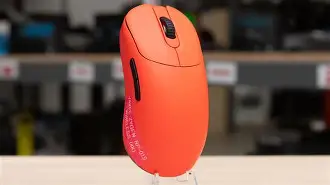
The Zygen NP-01S is more than just a minor iteration of a popular gaming mouse; it represents a specific philosophy in peripheral design that prioritizes functional shape and structural integrity over marketing gimmicks. Developed through a collaboration between VAXEE and the legendary mouse design team behind the original Zowie mice, the NP-01S is a "small" version of the original NP-01, but the "S" suffix belies the complexity of the changes made to its geometry. For competitive players in the tactical shooter space—titles like Counter-Strike, Valorant, and Rainbow Six Siege—this mouse has become a staple. Setting it up correctly is the difference between a high-performance tool and just another piece of plastic on your desk.
This guide serves as a comprehensive roadmap for maximizing the potential of the Zygen NP-01S. We will delve into the nuances of its physical design, the driverless configuration system, and the specific environmental adjustments that allow its sensor to perform at a professional level. Whether you are coming from a symmetrical shape or a traditional ergonomic mouse, understanding the hybrid nature of the NP-01S is essential for a seamless transition.
Detailed Product Analysis: The Hybrid Philosophy
To understand how to set up the NP-01S, one must first understand what it is trying to achieve. Most gaming mice fall into two categories: symmetrical (ambidextrous) or ergonomic (right-handed). Symmetrical mice offer consistent finger placement and are preferred for "fingertip" or relaxed "claw" grips. Ergonomic mice provide more palm support and a tilted angle that follows the natural slant of the hand, usually favoring "palm" grips. The Zygen NP-01S is a hybrid. It features a symmetrical-feeling front with an asymmetrical, flared back.
The "S" version is narrower than the original NP-01, specifically in the midsection and the grip width. This change makes the mouse feel significantly more nimble. The sensor implementation in the NP-01S is centered, which is critical for consistent muscle memory. VAXEE uses the PixArt 3389 or 3395 sensor (depending on the specific production run and wired/wireless version), but they have customized the firmware to prioritize low latency and a "raw" feel over excessive smoothing. This means the mouse tracks your hand movements with surgical precision, but it also means it is less forgiving of poor surface quality or incorrect LOD (Lift-off Distance) settings.
One of the most distinctive features of VAXEE products is the lack of software. In an era where every peripheral requires a 200MB background process and an account login, the NP-01S is entirely plug-and-play. All adjustments—DPI, Polling Rate, and Click Response Time—are handled via physical buttons on the underside of the mouse. This eliminates the risk of software mid-match crashes and ensures that your settings are stored on the hardware level, making it the perfect choice for LAN players and tournament competitors.
The Importance of Physics and Friction
The NP-01S is a medium-weight mouse by modern standards, typically hovering around 68 to 75 grams. This weight class provides a balanced "control" feel. While ultra-light mice (sub-50g) are popular for fast-paced tracking games like Apex Legends, tactical shooters benefit from the stability that a bit of mass provides. When setting up the NP-01S, users must consider the friction coefficient of their mousepad. The thick, high-quality 100% PTFE skates on the NP-01S are designed to provide a smooth glide, but the larger surface area of the rear skate means that the mouse offers high "stopping power."
Detailed Setup: Step-by-Step Configuration
Physical setup begins with the underside of the mouse. There are three primary buttons and a series of LED indicators. Understanding these is the first step toward optimization.
1. Adjusting the DPI (Dots Per Inch)
The left button cycles through four color-coded DPI stages: Red (400), Purple (800), Blue (1600), and Green (3200). For competitive gaming, 400 or 800 DPI are the standards. Selecting 800 DPI is generally recommended for modern high-resolution monitors to ensure smooth desktop navigation while maintaining high precision in-game. Because the NP-01S uses a high-end optical sensor, there is no technical "native" DPI benefit to choosing one over the other; however, lower DPI values can occasionally feel "steadier" in games with high sensitivity multipliers.
Looking for the best Electronics deals on Amazon?
See Deals →2. Setting the Polling Rate
The middle button controls the Polling Rate: 125Hz, 500Hz, or 1000Hz. Unless you are using a very old CPU that struggles with input interrupts, 1000Hz should be your default setting. It provides the lowest input latency (1ms) and the smoothest cursor movement. Some professional players still prefer 500Hz for a perceived "thickness" in the cursor feel, but for the majority of users, 1000Hz is the objectively superior technical choice.
3. Click Response Time Tuning
The right button is perhaps the most unique feature of the Zygen NP-01S. It adjusts the click latency: 2ms, 4ms, or 8ms. This determines the debounce time of the mechanical switches. Competitive players should aim for the 2ms setting to achieve the fastest possible reaction times. Standard mechanical switches sometimes suffer from "double-clicking" if the debounce is too low, but VAXEE’s rigorous switch binning process generally allows the NP-01S to run at 2ms without issues for its entire lifespan. If you ever experience accidental double-clicks, moving to 4ms is the recommended fix.
4. Lift-off Distance (LOD) and Motion Sync
While not immediately visible via a dedicated button, the NP-01S allows for internal adjustments for LOD. Ge…Pros and Cons of the Zygen NP-01S
- Pro: Unique Hybrid Shape - The blend of ergonomic and symmetrical elements provides more stability than a standard ambidextrous mouse while allowing for more finger freedom than a traditional ergonomic mouse.
- Pro: Build Quality - There is zero side-flex or creaking. The NP-01S feels like a solid block of high-density plastic, which is rare in the era of "honeycomb" light-weight mice.
- Pro: Coating Options - VAXEE offers the NP-01S in various coatings, including a matte finish that is excellent for dry hands and a glossy finish that provides incredible grip for those with sweatier palms.
- Pro: Driverless Design - No software means no resource hogging on your OS and no compatibility issues with anti-cheat systems like Vanguard or BattlEye.
- Con: Cable Stiffness - On the wired version, the paracord-style cable is slightly stiffer than some aftermarket options, necessitating the use of a mouse bungee for the best experience.
- Con: Scroll Wheel Noise - The 24-step optical scroll wheel is designed for distinct tactile feedback in gaming (highly accurate weapon switching), but it can be quite loud and "clattery" for productivity tasks.
- Con: Weight for Some - At ~70g, it might feel heavy to those accustomed to the trend of sub-50g "superlight" mice.
Technical Comparison: NP-01 vs. NP-01S
Choosing between the standard NP-01 and the "S" model is the most common dilemma for buyers. The following table highlights the physical differences that impact setup and grip style.
| Feature | Zygen NP-01 | Zygen NP-01S |
|---|---|---|
| Grip Width | Approx. 60mm | Approx. 58mm |
| Height | 39mm | 37mm |
| Overall Length | 120mm | 120mm |
| Main Trigger Height | Standard | Lowered for better control |
| Shape Profile | Fuller palm support | Slimmer, focused on finger agility |
Buying Guide: Is the NP-01S Right for You?
When purchasing an NP-01S, there are several factors beyond just the technical specifications that will influence your long-term satisfaction. Because VAXEE products are sold through their official storefronts to keep costs down and maintain quality control, you won't find them in traditional retail outlets. This makes the research phase even more critical.
Hand Size and Grip Compatibility
The NP-01S is optimized for "small to medium" hands (roughly 17cm to 19cm in length). If you use a claw grip, the flared back will provide a perfect anchor point for your palm, while the narrower waist allows your thumb and ring finger to sit closer together for better micro-adjustments. If you have very large hands and prefer a full palm grip, you may find the "S" variant too cramped, and the standard NP-01 would be the better choice. For fingertip grippers, the NP-01S is excellent because the lowered hump doesn't interfere with vertical movements as much as the original model.
Surface Compatibility
The sensor on the NP-01S is highly optimized for cloth surfaces. While it performs admirably on glass pads, the specific "control" intention of the mouse shines on high-quality cloth or hybrid pads. If you use a very fast, low-friction surface, you might find the 70g weight harder to stop precisely. Pairing the NP-01S with a medium-speed control pad is the "Goldilocks" setup for most competitive players.
Looking for the best Electronics deals on Amazon?
Browse Now →Wired vs. Wireless
The wired NP-01S is prized for its consistent latency and lower price point. However, the wireless version uses VAXEE's "Competitive Mode" firmware, which is designed to provide wireless performance that rivals or exceeds many wired competitors. If you choose the wireless model, the setup includes a "standard" receiver and a "high-speed" receiver option in the firmware settings. Ensure your wireless dongle is placed within 20cm of your mousepad to avoid signal interference from other 2.4GHz devices.
Optimizing the In-Game Environment
Once the hardware is configured, the final stage of the setup involves the operating system and in-game settings. Because the NP-01S is so precise, any software-based interference will be noticeable.
First, ensure that "Enhance Pointer Precision" is disabled in your Windows Mouse Settings. This is a form of mouse acceleration that varies your cursor speed based on how fast you move the mouse, which destroys muscle memory. In your game of choice, always use "Raw Input" if the option exists. This allows the game to bypass Windows' pointer processing and pull data directly from the NP-01S's sensor.
Sensitivity calibration is the final touch. Because the NP-01S has a lower profile, you might find that you can handle a slightly lower sensitivity than you used on a taller mouse. The increased finger control allows for larger arm swipes with higher confidence in the "stop." A common real-world use case for NP-01S owners is lowering their "eDPI" (DPI multiplied by in-game sensitivity) by about 5-10% to take advantage of the added stability the shape provides.
Conclusion
The Zygen NP-01S is a testament to the idea that thoughtful engineering beats flashy features. Its setup process is Refreshingly simple, yet deeply customizable for those who know where to look. By selecting the correct DPI and Polling Rate, adjusting the Click Response Time to suit your reflexes, and pairing the mouse with a surface that complements its PTFE skates, you create a peripheral setup that effectively disappears in your hand. The NP-01S doesn't try to be everything for everyone; it is a precision instrument for the competitive gamer. When configured correctly, it offers a level of consistency and tactile feedback that few other mice on the market can match. Setting up your NP-01S is not just about plugging it in—it is about fine-tuning your primary interface with the digital world to ensure that every flick, track, and click is an exact reflection of your intent.