Should You Buy the Gmktec Nucbox K10 Mini Pc in 2026? A Deep Dive
After using the Gmktec Nucbox K10 Mini Pc for several months as a compact desktop for work, media, light creative tasks, and a little bit of lab-style tinkering, I’ve come away with a pretty clear opinion: this is a very capable mini PC for the right person, but it absolutely is not the best fit for everyone.
When I first bought it, what appealed to me most was the promise of a small machine with a serious laptop-class Intel Core i9 chip, lots of ports, upgradeable memory, and enough storage flexibility to feel more like a tiny workstation than a basic office box. In day-to-day use, I found that a lot of that promise was real. It feels fast, responsive, and far more versatile than many smaller, cheaper mini PCs I’ve tested.
At the same time, I also noticed some tradeoffs that don’t show up in marketing copy. It gets warmer than I expected under sustained load. The fan isn’t obnoxious, but it is definitely noticeable when I push it. And while the integrated graphics are fine for general productivity and media, they put a real ceiling on gaming and GPU-heavy creative work.
If you’re wondering whether the Gmktec Nucbox K10 still makes sense in 2026, my short answer is this: yes, if you want strong CPU performance, broad connectivity, and internal upgrade flexibility in a compact desktop. No, if you want a silent machine, cutting-edge external I/O, or serious graphics power.
My First Impression After Setting It Up
What struck me immediately was that the K10 feels more substantial than the ultra-tiny mini PCs that disappear behind a monitor. It’s still compact, but it isn’t one of those palm-sized boxes that sacrifices cooling and expandability for novelty. In my experience, that slightly larger footprint is actually part of why the machine works as well as it does.
Setup was straightforward. I had Windows 11 Pro ready to go, and within the first evening I had it connected to multiple displays, a wired network, a keyboard, external drives, and a USB audio device without any drama. One thing I appreciated right away was the port selection. I didn’t have to reach for a dock or a hub, which is honestly one of the biggest quality-of-life benefits of a good mini PC.
I’ve been using this for browser-heavy office work, document editing, remote sessions, some coding tools, media playback, local file management, and occasional photo edits. For those jobs, it consistently felt quick and overqualified in a good way. Apps launched fast, multitasking stayed smooth, and I rarely felt like I was waiting on the machine.
Specs and Hardware: What You’re Actually Getting
The version I evaluated centers around an Intel Core i9-13900HK, which is a high-performance mobile chip with 14 cores and 20 threads. Even in 2026, that still gives the K10 impressive CPU headroom for productivity, development, office multitasking, virtualization experiments, and general desktop use.
Here’s what I found most relevant in practical use:
- Processor: Intel Core i9-13900HK
- Graphics: Integrated Intel Iris Xe graphics
- Memory: Dual-channel DDR5 SO-DIMM support, with upgrade potential well beyond entry configurations
- Storage: Multiple M.2 NVMe SSD slots, which is one of the most useful features of this system
- Networking: 2.5GbE LAN, Wi-Fi 6, Bluetooth 5.2
- Display support: Multiple display outputs including HDMI and DisplayPort
- Extra connectivity: Plenty of USB ports and even an RS-232 COM port for niche business or industrial use
I was surprised by how practical the storage expandability felt. A lot of mini PCs look upgradeable on paper but become annoying once you open them up. Here, I found the upgrade path genuinely useful. If you like the idea of a compact box that can handle a boot drive, extra storage, and maybe a separate workspace or media/project SSD, the K10 gives you that flexibility.
Performance After Months of Real Use
General Productivity
This is where the K10 makes the strongest case for itself. In my experience, it is excellent for office work, heavy browser use, spreadsheets, communication apps, research tabs, cloud tools, and general multitasking. I often had a lot open at once, and the system stayed composed.
What I found was that the machine feels less like a “mini PC compromise” and more like a legitimate compact desktop. That matters. Some small systems are fine until you stack enough tasks together. The K10, thanks to that i9-class CPU and DDR5 memory platform, feels much more comfortable under pressure.
Creative Work
For CPU-driven creative tasks, I had a fairly positive experience. Batch exports, file compression, light photo workflows, and general media management were all better than I expected. But I also noticed the limits quickly once graphics acceleration became more important.
Shop the latest Laptops & Computers picks on Amazon.
View Offers →If your workflow depends on a powerful GPU for advanced video effects, 3D rendering, or heavier AI-assisted media tools, this isn’t the machine I’d recommend first. The integrated Iris Xe graphics are good enough for everyday visuals, light media work, and casual older games, but they are not a substitute for discrete graphics.
Gaming
I want to be honest here: if gaming is a major reason you’re shopping, the K10 is not the right buy. I could run lighter titles and older games well enough at modest settings, but anything modern and demanding quickly reminded me that this is a CPU-strong, GPU-limited system.
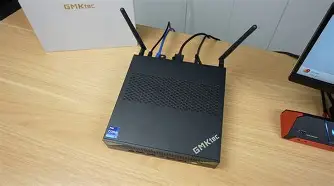
One thing that bothered me was that the excellent CPU almost makes you expect more gaming capability than the machine can really deliver. The processor is impressive, but the graphics side of the package remains the limiting factor.
Thermals and Noise
After testing for longer workloads, I noticed the K10 tends to run warm when the CPU stays busy for extended periods. That’s not unusual for a compact machine with a powerful mobile chip, but it is something buyers should expect.
The fan behavior was acceptable for me, though not exceptional. During normal desktop work, it stayed relatively unobtrusive. Under heavier load, it became clearly audible. I wouldn’t call it loud in a dramatic sense, but I also wouldn’t call it silent. If you’re highly sensitive to fan noise in a quiet office, you’ll notice it.
In my experience, the cooling solution is doing a difficult job reasonably well, but physics still wins. A compact chassis with a high-end mobile CPU is always going to ask something of thermals and acoustics.
Ports, Connectivity, and Why This Matters More Than It Seems
This is one of the K10’s best features. I’ve been using this with external drives, periphe…You get a healthy selection of USB ports, HDMI outputs, DisplayPort, audio, 2.5GbE, wireless connectivity, and that unusual RS-232 port. I realize the COM port won’t matter to everyone, and in my case I didn’t need it daily, but I can see why some buyers in technical, industrial, POS, or legacy-equipment environments would specifically choose this system because of it.
What I appreciated most was not any one port, but the fact that the machine feels ready. I didn’t need to build a dongle ecosystem around it. For a small desktop, that’s a real strength.
The main omission I noticed was the lack of more forward-looking connectivity such as USB4 or Thunderbolt-class expansion. In 2026, that absence is easier to notice. If you care about top-tier external storage flexibility or future eGPU-style experimentation, the K10 feels a bit behind there.
Upgradeability and Internal Access
This is probably the feature that made me like the K10 more over time. Many compact PCs are fine until you outgrow the original configuration. Here, I found the internal design much more accommodating than average.
Memory upgrades are realistic, not theoretical. Storage expansion is also a major plus, especially if you want multiple NVMe drives in one small machine. That gave me more freedom to separate operating system duties from files and scratch space.
After opening it up and looking at the internal layout, I came away thinking this machine was designed by people who understood that mini PC buyers often want to tinker a little. That doesn’t mean it feels premium in a luxury sense, but it does feel practical.
Looking for the best Laptops & Computers deals on Amazon?
Browse Now →Build Quality and Daily Ownership
I’d describe the build as functional rather than luxurious. It feels solid enough for normal desk use, but it doesn’t have the polished, premium-density feel that some top-tier compact systems from larger brands manage.
I noticed that the chassis presentation is more about utility than design flair. That didn’t really bother me because I care more about performance and expandability than aesthetics, but if you want something that feels especially refined when you pick it up, this may not impress you the same way.
The included accessories also felt basic. Nothing was offensively bad, but nothing felt upscale either. It’s one of those products where the value goes into the machine itself rather than the extras in the box.
Pros and Cons
What I Liked
- Excellent CPU performance for productivity, multitasking, and workstation-style desktop use
- Very good upgradeability with DDR5 memory support and multiple NVMe storage options
- Strong port selection that reduces the need for hubs and adapters
- 2.5GbE and Wi-Fi 6 make it flexible for fast home or office networking
- Multi-display friendly for office setups, dashboards, and productivity workstations
- Useful for niche business or technical roles thanks to the RS-232 port
- Good value for the performance level compared with some bigger-brand compact systems
What I Didn’t Like
- Integrated graphics limit gaming and GPU-heavy creative workloads
- Runs warm under sustained load, which is expected but still noticeable
- Fan becomes audible when the system is pushed hard
- No USB4 or equivalent next-gen expansion, which feels dated in 2026
- Build quality is competent but not premium
- The industrial-style features won’t matter to every buyer, so some of the rear I/O may feel wasted in a home setup
How It Compares to Other Mini PCs in 2026
If I had to place the K10 in today’s market, I’d say it sits in an interesting middle ground. It’s stronger and more expandable than bargain mini PCs, but it doesn’t fully compete with compact systems that offer newer external I/O or better graphics options.
| Category | Gmktec Nucbox K10 | Cheaper Entry Mini PCs | Higher-End Modern Mini PCs |
|---|---|---|---|
| CPU Performance | Very strong | Often moderate | Strong to excellent |
| Graphics Power | Basic to light-duty | Basic | Often better, depending on model |
| Upgradeability | Excellent for its size | Often limited | Varies |
| Port Selection | One of its biggest strengths | Usually more limited | Often modernized, sometimes less legacy-friendly |
| Noise and Thermals | Acceptable, but noticeable under load | Can be better or worse depending on CPU | Usually better engineered at the top end |
| Overall Value | Strong if you want CPU power and expandability | Better for basic budgets | Better for premium needs, but pricier |
In my experience, the K10 makes the most sense when you specifically want a compact machine with serious processor power and practical internal expansion. If you care more about GPU power or the newest external connectivity standards, I’d look elsewhere first.
Buying Guide: Who Should and Shouldn’t Buy the Gmktec Nucbox K10
You Should Consider It If:
I think the K10 is a smart buy in 2026 if you need a compact desktop for work, productivity, development, trading screens, digital signage, home office duty, or a small lab machine with strong CPU performance. I’d also recommend it to buyers who value upgradeable RAM and multiple NVMe slots more than they value gaming power.
If you like the idea of buying one box and growing into it over time, this system has a lot going for it.
You Should Skip It If:
I would skip it if your top priorities are silent operation, premium materials, powerful gaming, advanced video editing acceleration, or the latest high-bandwidth external connection standards. I’d also pass if you only need a basic streaming-and-browsing PC, because the K10 can be overkill for simple use.
What I’d Check Before Buying
- RAM configuration: Make sure the included amount matches your workload so you don’t overspend or underspec
- SSD layout: Confirm how much internal storage you want immediately versus later
- Noise tolerance: Be realistic about whether a noticeable fan under load will bother you
- Graphics expectations: Don’t buy this as a stealth gaming machine
- Port priorities: If you need USB4-class connectivity, verify alternatives before committing
My Final Verdict After Living With It
After several months with the Gmktec Nucbox K10 Mini Pc, I think it remains a good buy in 2026 for a specific kind of user. What won me over was how competent it feels as a real everyday computer, not just a novelty-sized desktop. I appreciated the fast CPU, the generous I/O, the multi-drive flexibility, and the fact that it handled serious multitasking without feeling strained.
At the same time, I don’t think it’s universally easy to recommend. I was impressed by the processor performance, but I was also reminded regularly that cooling, graphics, and next-gen connectivity are where the compromises live. One thing that stood out to me most is that the K10 is at its best when you treat it like a compact productivity workstation, not a do-everything miracle box.
If that sounds like what you need, I think the K10 still earns consideration. If your priorities lean toward modern graphics performance, ultra-quiet acoustics, or the newest expansion standards, I’d keep shopping. For me, the value of the K10 came from how much desktop-like usefulness it delivered in a relatively small footprint, and that’s why I think it still has a place in 2026.