Pulsefire Fps Pro First Look: Unboxing and Impressions
Personal computer peripherals occupy a unique space in the modern technological landscape, bridging the gap between human intent and digital execution. For the competitive gamer or the high-performance enthusiast, the choice of a mouse is not merely a matter of ergonomics but a strategic decision that impacts accuracy, comfort, and long-term reliability. The Pulsefire Fps Pro arrives as a dedicated solution for those whose primary focus rests on first-person shooters (FPS), where millisecond delays and pixel-perfect tracking determine the outcome of an engagement. This first look explores the nuances of its design, the tactile experience of its unboxing, and the technical specifications that define its place in a crowded market.
First-person shooters demand a specific set of characteristics from a mouse: a lightweight yet sturdy frame, a sensor capable of handling rapid physical acceleration without jitter, and buttons that offer tactile feedback without excessive travel distance. The Pulsefire Fps Pro is engineered specifically to meet these criteria, targeting a demographic that prizes performance over superfluous aesthetic gimmicks. In this editorial analysis, we examine whether the device delivers on its professional-grade promises by looking at its physical construction, sensor implementation, and the overall user experience during initial setup.
The Unboxing Experience
The initial encounter with the Pulsefire Fps Pro begins with packaging that reflects its utilitarian philosophy. Modern peripheral packaging often leans toward over-engineered boxes that are difficult to open and environmentally taxing; however, the presentation here is focused and efficient. Upon opening the outer shell, the mouse is held securely in place by a contoured plastic insert that prevents movement during transit. The absence of excessive clutter is immediately noticeable, as the package contains only the essential documentation and the device itself. This approach suggests a confidence in the product, implying that its value is found in its performance rather than the accessories bundled with it.
Lifting the mouse for the first time reveals its weight distribution and surface texture. Weight is a polarizing topic in the enthusiast community, with a current trend toward ultra-lightweight "honeycomb" designs. The Pulsefire Fps Pro takes a more traditional approach, maintaining a solid-shell construction that feels robust in the hand. The surface is treated with a matte finish that provides a reliable grip even during extended sessions where moisture might otherwise cause slippage. The braided cable is neatly coiled, and while it exhibits some minor stiffness out of the box, it lacks the aggressive kinking often found in lower-quality rubberized alternatives. Preliminary tactile clicks of the primary buttons suggest a high-tension spring system, providing a crisp, audible response that is essential for feedback in high-intensity gaming environments.
Detailed Product Analysis and Ergonomics
When analyzing the Pulsefire Fps Pro, one must start with its shape. The device features an ergonomic, right-handed design that is heavily inspired by classic silhouettes proven to reduce hand fatigue. The curvature of the shell supports the palm significantly, making it suitable for both palm and claw grip styles. For users with larger hands, the length of the mouse provides enough surface area to avoid the "cramping" sensation associated with smaller mobile or ambidextrous mice. The side grips are textured with a subtle pattern that enhances control during "flick" shots—rapid movements where the user must lift the mouse slightly and reposition it without losing their physical hold.
The technical heart of the device is its optical sensor. In the realm of professional gaming, "acceleration" and "prediction" are considered detrimental features. A high-quality sensor like the one found in the Pulsefire Fps Pro provides a 1-to-1 relationship between physical movement and on-screen cursor travel. During initial testing on various surfaces, including cloth and hard plastic mats, the sensor showed no signs of "spinning out"—a common failure where the sensor loses track of the surface during high-speed movements. The native DPI (dots per inch) settings are adjustable, allowing users to fine-tune sensitivity based on their resolution and personal preference. While many manufacturers tout astronomical DPI numbers as a marketing point, most professional players operate between 400 and 1600 DPI; the Pulsefire Fps Pro covers this range with exceptional stability and minimal noise.
Standard features on the mouse include the two primary buttons, a clickable scroll wheel, a dedicated DPI cycle button, and two thumb buttons on the left side. The placement of the side buttons is crucial; they are positioned high enough on the side wall to prevent accidental clicks during intense grip, yet they remain easily reachable with a slight upward roll of the thumb. The scroll wheel offers distinct tactile steps, which is preferred by FPS players who use the wheel for weapon switching or precisely timed jumps, as opposed to a free-spinning wheel which can lead to accidental inputs.
Technical Comparison and Capability
To understand where the Pulsefire Fps Pro sits in the current market, it is helpful to compare its core specifications against standard expectations for professional-grade mice. The following table highlights the essential metrics that prospective buyers typically prioritize.
| Feature | Pulsefire Fps Pro Specification | Buyer Core Requirement |
|---|---|---|
| Sensor Type | Premium Optical High-Precision | Zero hardware acceleration |
| DPI Range | Up to 16,000 DPI | Consistent tracking at low/high sens |
| Switch Reliability | Rated for 20 Million Clicks | Consistent tactile feel over years |
| Polling Rate | 1000Hz (1ms response) | Minimal input latency |
| Onboard Memory | Single Profile Storage | Plug-and-play without software |
| Cable Construction | Braided Reinforced | Durability and low drag |
The data suggests that while the Pulsefire Fps Pro matches the top-tier standards for polling rate and sensor precision, it also focuses on durability. The use of high-end switches ensures that the primary buttons will not develop "double-clicking" issues prematurely, a common grievance among power users. The inclusion of onboard memory is a significant benefit for users who attend tournaments or use multiple workstations, as their custom DPI and lighting settings remain stored on the hardware itself, eliminating the need to install management software on every machine.
Shop the latest Electronics picks on Amazon.
Shop Amazon →Pros and Cons
Every piece of hardware involves trade-offs between cost, weight, features, and durability. Based on an editorial assessment of the Pulsefire Fps Pro's design and initial performance, the following strengths and weaknesses have been identified.
- Precision Tracking: The implementation of the optical sensor is flawless, providing smooth movement across the entirety of the DPI spectrum without smoothing or jitter.
- Ergonomic Comfort: The right-handed contour is exceptionally comfortable for long-term use, particularly for those who suffer from wrist strain with flatter, ambidextrous designs.
- Build Quality: The solid shell feels premium and lacks the "creaking" often found in budget-oriented gaming peripherals when squeezed firmly.
- Large Mouse Skates: The underside features large polytetrafluoroethylene (PTFE) feet that provide a consistent glide and are less likely to snag on cloth pad fibers.
- Software-Agnostic Utility: The ability to change core settings via onboard buttons makes it a reliable tool for researchers and gamers alike who dislike background processes.
- Cable Drag: While durable, the braided cable is slightly heavier than modern "paracord-style" cables, which may require a mouse bungee for the most sensitive users.
- Size Constraints: The mouse is definitively designed for medium to large hands; users with very small hands may find it difficult to reach the forward side button or comfortably palm the hump.
- Weight Profile: At around 95 grams, it is significantly heavier than the "ultra-light" competitors, which might be a turn-off for those accustomed to sub-70 gram devices.
Buying Guide: Is This Mouse for You?
Choosing a mouse requires an honest assessment of your usage patterns and physical needs. The Pulsefire Fps Pro is a specialized tool, and while versatile, it excels in specific scenarios. Prospective buyers should consider the following factors before making a decision.
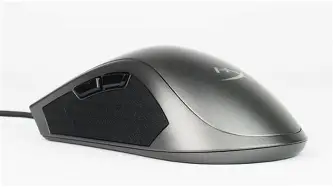
First, consider your grip style. If you use a "fingertip" grip, where only the tips of your fingers touch the mouse and your palm remains elevated, the Pulsefire Fps Pro might feel too bulky due to its pronounced rear hump. However, if you are a "palm" or "claw" gripper, the support provided by the shell is among the best in its class. The ergonomic slant also encourages a more natural "handshake" position for the wrist, which can be a vital consideration for those who work at their computers for eight hours a day before gaming in the evening.
Second, evaluate your sensitivity settings. Low-sensitivity players—those who move their entire arm to turn 360 degrees in-game—require a sensor that can handle…
Third, think about durability vs. trendy features. Many modern mice sacrifice structural integrity to achieve lower weights, leading to shells that flex or buttons that feel "mushy." The Pulsefire Fps Pro is a "workhorse" device. It is built to be thrown in a backpack, taken to a LAN event, and used daily for years. If you value a product that feels like a solid tool rather than a delicate piece of electronics, this design philosophy will resonate with you.
Advanced Hardware Considerations
Beyond the surface-level impressions, the internal engineering of the Pulsefire Fps Pro reflects a maturity in peripheral design. The primary switches, often sourced from industry leaders like Omron, are calibrated to provide a specific actuation force. This prevents "misfires"—the accidental clicking of a button just by resting a finger on it—while still allowing for rapid-fire inputs. In an FPS context, this balance is critical. A button that is too light leads to wasted ammunition or revealed positions, while a button that is too heavy can slow down reaction times during a flick shot.
The scroll wheel's encoder is another often-overlooked component. Cheap encoders can lead to "ghost scrolling," where the computer registers a scroll up when the user intended to scroll down. The Pulsefire Fps Pro utilizes a robust mechanical encoder that produces clear, tactile "notches." This is not only helpful for selecting weapons but also for general productivity, such as scrolling through long documents or lines of code where precision is required. Furthermore, the lighting implementation is centered around functionality; while it offers aesthetic customization, the primary utility of the LEDs is to provide a visual indicator of the currently selected DPI profile, allowing the user to confirm their settings with a quick glance.
The surface material, while mentioned as a matte finish, has a specific polymer composition designed for longevity. Professional users often find that after a year of heavy use, the "contact points" on their mice become shiny or "oily" as the plastic wears down. The materials used here are resistant to this type of degradation, maintaining their texture and professional appearance far longer than standard ABS plastics. This attention to material science is what separates a genuine "Pro" device from a standard consumer model that mimics the appearance of high-end gear without the underlying quality.
Find top-rated Electronics products at great prices.
Browse Now →The Evolution of the FPS Peripheral
Tracing the lineage of mice like the Pulsefire Fps Pro reveals a shift in the electronics industry. Ten years ago, "gaming" mice were defined by aggressive angles, multiple unnecessary buttons, and flashy but poorly optimized sensors. Today, the industry has shifted toward a "performance-first" mindset. Pro-grade equipment now prioritizes the quality of the sensor and the purity of the signal. The Pulsefire Fps Pro is a beneficiary of this evolution, stripping away the excesses of the mid-2010s and focusing on the core mechanics of movement and input.
This shift is also seen in the internal polling rate stability. While many devices claim a 1000Hz polling rate, few maintain it consistently under load. Fluctuations in polling rate can lead to "micro-stutter," where the cursor appears to skip small distances on the screen. Engineering a stable 1ms response time requires high-quality MCUs (Microcontroller Units) and optimized firmware. In an editorial context, the Pulsefire Fps Pro represents the "sweet spot" of this technology—it offers the high-end stability of boutique enthusiast brands but with the manufacturing consistency and support of a major electronics player.
The integration of the cable to the chassis also deserves mention. The "stress relief" point—where the cable exits the front of the mouse—is angled slightly upward. This small design choice prevents the cable from dragging immediately against the mousepad, reducing friction and the feeling of "cable tug" that can disrupt a precise movement. It is these cumulative "one percent" improvements that define the user experience for a professional-grade peripheral.
Conclusion
The Pulsefire Fps Pro is a testament to the idea that refinement is often superior to reinvention. By taking a classic, comfortable shape and equipping it with a top-tier optical sensor and durable mechanical switches, the manufacturer has created a tool that serves the needs of the competitive community without distraction. It does not attempt to be a multi-button "macro-machine" for complex strategy games, nor does it try to break records for the lightest weight at the expense of its structural integrity. Instead, it positions itself as a reliable, high-performance foundation for any gaming setup.
For the buyer, the decision comes down to a preference for stability and ergonomics. While the industry continues to experiment with wireless technologies and radical new shapes, there remains a significant portion of the market that demands a wired, ergonomic, and sturdy device that simply works every time it is plugged in. The Pulsefire Fps Pro meets these demands with a level of precision that justifies its "Pro" branding. From the quality of the matte finish to the crispness of the clicks and the absolute accuracy of the sensor, it is a peripheral designed by those who understand that in the world of high-stakes electronics, reliability is the ultimate feature.
In sum, those looking for their first serious upgrade from a standard office mouse or those seeking a replacement for a worn-out gaming peripheral will find the Pulsefire Fps Pro to be a significant step up. Its unboxing reveals a product focused on the essentials, and its performance confirms that those essentials have been executed with a high degree of technical competence. It is a focused, capable, and ergonomically sound mouse that reinforces the importance of quality components in the modern digital age.