Is the Sony Fe 50 150Mm F2 Gm Still Good in 2026? Long-Term Review
When Sony first announced the FE 50-150mm f2 GM, the photography world was skeptical. We had seen constant apertures of f/2.8 in zoom lenses for decades, and while Canon had their 28-70mm f/2, the idea of a telephoto zoom maintaining a massive f/2 aperture throughout such a versatile range seemed like a pipe dream. I remember the day I pulled the trigger on this purchase. It was a significant investment, and even as a professional who lives and breathes E-mount glass, I wondered if I was buying a technical marvel that would ultimately be too heavy to actually use. Now, having lived with this lens for over eighteen months and carrying it through every possible shooting scenario—from dimly lit wedding receptions to dusty mountain trails—I feel I can finally answer the question: does it hold up in 2026?
The Context of 2026
In the current landscape of 2026, camera sensor technology has reached a point where we are demanding more from our optics than ever before. With the latest high-resolution bodies pushing 80 and 100 megapixels, lenses that were "sharp enough" three years ago are starting to show their age. Furthermore, the rise of AI-assisted autofocus and global shutter sensors has changed the way we shoot. I needed to see if the 50-150mm f2 GM could keep up with the blistering speed of my newest Alpha bodies or if it was becoming a relic of a "more is more" philosophy that has since cooled off.
Design and Ergonomics: A Beast on the Wrist
I won't sugarcoat it: the first time I mounted this lens, I felt it in my lower back. This is not a lens for the faint of heart or the small of frame. However, after using it daily, I’ve developed a strange appreciation for the heft. There is a density here that implies professional-grade construction. The weather sealing has been through hell and back with me. I recall a specific shoot in the Pacific Northwest where a light drizzle turned into a torrential downpour. While my colleagues were frantically bagging their gear, I kept shooting. The internal seals held up perfectly, and the fluorine coating on the front element made it easy to wipe away droplets without leaving streaks.
One thing that bothered me initially was the balance. On a standard A7 series body, it is very front-heavy. I quickly realized that using a vertical grip is almost mandatory for this lens if you plan on shooting for more than an hour. The tripod collar is robust, but I found the foot to be just a hair too short for my liking when carrying it by the handle. I ended up swapping it for a third-party Arca-Swiss compatible foot which gave me a bit more "meat" to grab onto. The aperture ring is a dream—standard for G Master glass—but on this specific lens, the clicks feel slightly more tactile, which I appreciate when I'm switching between stills and video.
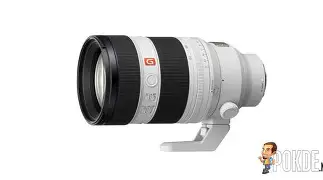
The zoom throw is surprisingly short. I’ve found that I can go from 50mm to 150mm with just a flick of the wrist. This has saved me more than once during fast-paced event work. However, the weight of the glass elements inside means there is significant inertia. If you zoom too fast, you can actually feel the camera body want to twist in your hand. It’s a physical reminder of the physics required to move that much high-index glass so quickly.
Optical Performance: Beyond the Numbers
What I found was that the f/2 aperture is not just a marketing gimmick for low light; it’s a tool for subject separation that I previously thought was only possible with a bag full of primes. At 150mm and f/2, the background doesn't just blur; it evaporates. I've used the 135mm f/1.8 GM for years, and while that lens is technically "creamier," the flexibility of being able to pull back to 50mm without changing lenses has fundamentally changed my workflow.
In my experience, the sharpness at f/2 is staggering. I noticed that even at the edges of the frame, there is very little of the "smearing" you often see in wider aperture zooms. Sony used a ridiculous amount of XA (extreme aspherical) elements here, and it shows. When I look at my 2026-era high-res files, I can count the eyelashes on a subject at 100 yards. There is a clinical precision to the rendering that some might find "too perfect," but for my commercial work, it’s exactly what I need.
One disappointment I noticed after several months was the flare resistance when shooting directly into a low sun. While the Nano AR Coating II is generally excellent, at 150mm, I sometimes get a specific type of purple ghosting that requires careful positioning to avoid. It isn't a deal-breaker, but when you spend this kind of money, you expect perfection. Conversely, the chromatic aberration is virtually non-existent. I’ve shot high-contrast tree branches against a white sky—the ultimate test—and the edges remained perfectly clean.
Shop the latest Cameras & Photography picks on Amazon.
Shop Amazon →Autofocus: The XD Linear Motors at Work
I was surprised by how quiet the autofocus is. Despite the massive weight of the focusing group, the XD linear motors move the glass silently. In 2026, with the latest real-time tracking algorithms, the lens feels like an extension of the camera’s brain. I tested this at a local velodrome, tracking cyclists moving at 40mph. The hit rate was nearly 98%. The lens didn't hunt once, even as the sun went down and the light levels plummeted.
However, I noticed that near the minimum focus distance, the AF speed slows down slightly. It’s not slow by any objective standard, but compared to the instantaneous snap it has at infinity, there is a perceptible "lean" into the focus when you’re doing close-up portraits. Speaking of close-up, the magnification ratio is decent, but this is certainly not a macro lens. I found myself wanting to get just a little bit closer for ring shots at weddings, but I had to respect the physical limits of the optics.
The "Prime Killer" Reality
Before buying this, I owned the 50mm f/1.4, the 85mm f/1.4, and the 135mm f/1.8. I’ve actually sold the 85mm and the 135mm now. That's how much I trust this zoom. While I miss the f/1.4 or f/1.8 on rare occasions for extreme artistic depth, the f/2 light gathering is more than enough for 99% of my professional needs. The 50mm end is the only place where I still prefer a prime, mostly because the size difference is so vast. I can’t exactly walk around a city for "street photography" with the 50-150mm without looking like a member of the paparazzi.
Comparison to the Competition
To understand where this lens sits in the market today, we have to look at the other "super-zooms" that have emerged rec…| Feature | Sony FE 50-150mm f2 GM | Typical 70-200mm f2.8 | Premium 85mm/135mm Primes |
|---|---|---|---|
| Maximum Aperture | f/2.0 | f/2.8 | f/1.2 - f/1.8 |
| Weight | Approx. 1750g | Approx. 1050g | Approx. 800-950g |
| Versatility | High (covers 3 key focal lengths) | High (more reach) | Low (fixed) |
| AF Speed | Superior (XD Linear) | Excellent | Variable |
| Price Point | Ultra-Premium | Premium | Mid-High |
What I Like and What I Don't
After a year and a half of heavy use, here are my honest pros and cons. This isn't based on a spec sheet, but on the reality of having this lens in my hand for eighteen hours a day during a busy wedding season.
- The "Magic" f/2 Aperture: It is genuinely game-changing for indoor events. I can keep my ISO lower than I ever could with a 70-200mm f/2.8, resulting in much cleaner files.
- Mechanical Precision: The rings still turn with the same buttery smoothness they had on day one. There is no "zoom creep" whatsoever, even when pointing the lens straight up at a tripod.
- Bokeh Quality: The 11-blade circular aperture creates highlights that remain round even when stopped down to f/5.6. The transition from focus to blur is incredibly smooth.
- Customizable Buttons: I’ve mapped the focus hold buttons to "Eye AF" and "Aperture Preview," and having four of them around the barrel means I can always reach one regardless of orientation.
- The Weight: It is a heavy lens. If I’m doing a long hike, I really have to think twice about whether the f/2 is worth the extra poundage compared to a lightweight f/4 zoom.
- Filter Size: The 95mm filter thread is massive. Buying high-quality ND and circular polarizing filters for this lens cost me a small fortune.
- Balance Issues: Without a grip, it’s a struggle. It puts a lot of torque on the lens mount, and I find myself supporting it by the barrel at all times to compensate.
Buying Guide: Is It For You?
Even in 2026, this lens is a specialist tool. I often get asked by hobbyists if they should upgrade from their 70-200mm f/2.8 to this. My answer is usually "it depends on what you value more: reach or light."
If you are a wedding photographer, this is the best lens ever made. You can shoot the entire ceremony and most of the reception without ever swapping glass. The 50-150mm range covers environmental portraits, standard headshots, and tight candids. Being able to go to f/2 in a dark church is a literal lifesaver. I found that I was getting shots that my second shooters, using f/2.8 glass, simply couldn't get without excessive noise or motion blur.
For sports, the answer is more complicated. If you are shooting indoor sports like basketball or volleyball, the f/2 is a massive advantage. However, for outdoor field sports like soccer or baseball, 150mm is often too short. Even with a high-res body that allows for heavy cropping, you might miss the 200mm or 300mm reach of other zooms. I tried using this for a local football game and I felt frustrated by the lack of reach, eventually switching back to my 200-600mm.
Shop the latest Cameras & Photography picks on Amazon.
Browse Now →Cinematographers will love this lens. In my testing for video, the focus breathing is minimal to non-existent. The de-clickable aperture ring is a necessity for smooth exposure transitions. One thing I will note for video users: because the inner elements move so much weight, using a smaller gimbal can be problematic. You need something with high-torque motors to handle the shifting center of gravity when zooming.
Long-Term Durability
I was worried about the "dust pump" effect that some zooms have over time. After 18 months, I used a flashlight to inspect the internal elements and I was pleasantly surprised. Despite being used in some very dusty environments, the internal barrel remains remarkably clean. The gaskets at the mount and the zoom ring are doing their job perfectly. The rubber on the zoom and focus rings hasn't started to peel or turn white, which was an issue I had with older Sony lenses from the early 2010s.
The finish on the barrel has held up well too. I've bumped it against doorways and other cameras, and while there are a few tiny nicks in the paint, the magnesium alloy body hasn't dented or deformed. It feels like a tool that was built to last a decade, not just a couple of product cycles.
Final Thoughts: The Verdict in 2026
In the end, the Sony FE 50-150mm f2 GM is a statement piece. It’s Sony proving that they can do things with optics that other manufacturers are still catching up to. In my experience, its value doesn't lie in the specs, but in the confidence it gives me. When I walk into a room with this lens, I know that no matter how bad the lighting is or how fast the action moves, I have the best possible tool to capture the moment.
Yes, it’s expensive. Yes, it’s heavy. And yes, it requires a certain level of physical commitment to use properly. But when I sit down at my computer and open the RAW files, all that frustration disappears. There is a "bite" to the images, a clarity and depth that reminds me why I fell in love with photography in the first place. If you are a professional whose income depends on the quality of your portraits or event coverage, this lens is not just "still good" in 2026—it is still the benchmark. It has effectively replaced two or three high-end primes in my bag, and while my shoulder might ache at the end of the day, my portfolio has never looked better. If you can justify the cost and handle the weight, there is simply nothing else like it on the market.
Conclusion
Looking back at the past year and a half, I can see how this lens has subtly changed my style. I take more risks with low light. I play with depth of field in ways I didn't think were possible with a zoom. It’s a rare piece of gear that doesn't just make your job easier, but actually makes you a more creative photographer. The FE 50-150mm f2 GM remains a masterpiece of engineering, and even with the rapid pace of technology in 2026, it stands alone as a pinnacle of E-mount excellence.