Head-to-Head: Magstor Thunderbolt 3 Lto Drive vs Acer Aspire 14 Ai 2025 (Detailed Comparison)
Introduction
Comparing a Thunderbolt 3 LTO tape drive to a budget-friendly 14-inch AI laptop may sound like an apples-to-oranges exercise—and in many ways, it is. But in real workflows, these two product types frequently collide at the decision point buyers care about most: how to store, protect, move, and work with data.
The MagStor Thunderbolt 3 LTO Drive is designed for long-term archiving and high-capacity backups using LTO tape—still a backbone technology in video production, studios, research groups, and organizations with compliance requirements. Meanwhile, the Acer Aspire 14 AI (2025) aims to be a practical everyday laptop—built for schoolwork, office productivity, light creative tasks, and modern “AI PC” features at a relatively approachable price.
This head-to-head comparison looks at what each product does best, where each one disappoints, and how to decide between them based on real-world priorities: reliability, total cost, performance, portability, connectivity, and long-term value.
Quick Context: Why These Two Might Be Cross-Shopped
Buyers rarely choose “an LTO drive instead of a laptop.” More often, they are choosing how to allocate budget for a workflow:
- Content creators may already own a laptop and are deciding whether to add professional-grade archiving.
- Small businesses may be choosing between upgrading employee laptops or investing in an offline backup solution to reduce ransomware risk.
- Photographers/videographers may be evaluating whether a budget laptop plus robust backups is better than a higher-end laptop with only external SSDs.
- IT admins may be assessing whether a simple Thunderbolt-connected tape solution can replace a more complex network backup appliance.
Detailed Product Analysis: MagStor Thunderbolt 3 LTO Drive
What It Is (and Who It’s For)
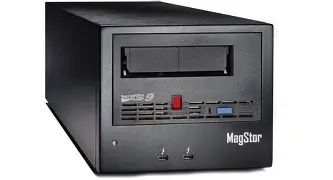
The MagStor Thunderbolt 3 LTO Drive is a desktop LTO tape solution that connects via Thunderbolt 3 / USB‑C. In LTO terms, this is about high-capacity removable media designed for long-term retention, offline storage, and archival workflows. It’s especially relevant for professionals who:
- Need long-term archives for completed projects (film, TV, ad work, documentary, weddings, commercial photography).
- Want offline backups to reduce exposure to ransomware and accidental deletions.
- Operate under retention/compliance requirements and want “write, verify, store” media practices.
- Produce data sets too large or too expensive to keep spinning on always-on cloud storage.
Key Features That Matter in Practice
One of MagStor’s main value propositions is that it aims to make LTO less intimidating by offering a direct-attached Thunderbolt workflow rather than requiring a separate server and SAS card setup. A representative MagStor Thunderbolt 3 LTO‑8 model is the TRB3‑HL8, which includes a Thunderbolt 3 connection and is designed for Mac or Windows workflows.
Capacity, Speed, and the Reality of Tape Workflows
LTO tape is about two things buyers care about when projects get large: cost per terabyte and offline durability. With LTO‑8, the native capacity per cartridge is commonly discussed as 12TB native (with higher “compressed” marketing numbers depending on data type), and native throughput for the drive class is often described around 300 MB/s for read/write in optimal conditions. The practical implication: for large sequential backups—video originals, camera card dumps, high-res masters—tape can be surprisingly efficient once you commit to the workflow.
However, tape is not a drop-in replacement for an external SSD. Tape is sequential media, and LTO is best for:
- Archiving whole projects (folders, timelines, deliverables) rather than constantly changing working sets.
- Batch backups with verification rather than small frequent file edits.
- Cold storage where speed of retrieval is less important than integrity and cost control.
Connectivity and Integration
Thunderbolt 3 connectivity is a big deal for creative professionals because it matches the ecosystem: MacBook Pro/Studio workflows, Thunderbolt docks, and high-speed storage are common in editing and post-production. Many LTO solutions historically felt “IT-only.” A Thunderbolt approach can reduce friction—especially in smaller teams without dedicated infrastructure.

That said, buyers should be clear-eyed about what “simple” means. Even with streamlined connectivity, an LTO workflow still requires:
- Software choices (LTFS tooling, backup apps, cataloging/asset management if needed).
- Media handling discipline (labeling, offsite rotation, environmental storage).
- Verification steps and periodic restore testing.
Long-Term Value: The Offline Backup Advantage
Offline media is experiencing renewed interest because modern threats aren’t only drive failures—they’re also:
- Ransomware that encrypts connected storage.
- Sync mistakes that propagate deletions to cloud copies.
- Credential compromise that can expose cloud archives.
LTO tapes stored offline (and ideally offsite) can function as a “last line of defense” that is physically disconnected from everyday operations.
Pros & Cons: MagStor Thunderbolt 3 LTO Drive
Pros
- Massive archival capacity per cartridge, well-suited for large project libraries.
- Offline storage benefits for security and disaster recovery planning.
- Thunderbolt 3 connectivity aligns with many pro Mac/PC creative setups.
- Strong fit for long-term retention workflows where data must be kept for years.
- Scales via media: adding capacity often means buying more tapes, not a whole new chassis.
Cons
- High upfront cost compared with typical external drives.
- Not ideal for active working storage; tape is best for batches, not constant edits.
- Workflow overhead (cataloging, labeling, verification, rotation) is real.
- Restore times and random access are slower than SSD/HDD storage.
- Ongoing media costs (tapes, cases, storage practices) add up—though often predictably.
Detailed Product Analysis: Acer Aspire 14 AI 2025
What It Is (and Who It’s For)
The Acer Aspire 14 AI (2025) is positioned as a practical, budget-friendly 14-inch laptop built around modern “AI PC” expectations—generally meaning an up-to-date platform, decent everyday performance, and hardware capabilities aligned with current Windows features and workloads. This is the kind of laptop buyers consider when they want:
- Everyday portability (work, school, commuting).
- General productivity (docs, web apps, spreadsheets, meetings).
- Light creative work (basic photo edits, simple video trims, light design tasks).
- Value: a “good enough” machine that doesn’t overspend on premium materials or high-gamut displays.
Real-World Strengths: Practical Utility
In typical reviews and buyer experiences of this class, the Aspire line’s appeal is often that it doesn’t try to be flashy—it tries to be useful. What buyers usually care about in this category includes:
Find top-rated Laptops & Computers products at great prices.
View Offers →- Keyboard and trackpad comfort for long writing or office sessions.
- Battery life that survives a school or work day.
- Port selection so fewer dongles are needed.
- Thermal behavior (does it get loud, does it throttle, does it stay comfortable on the lap).
- Display readability for indoor productivity (brightness, glare, text clarity).
Where this model family frequently draws criticism is display quality for creators—especially if the panel has limited color gamut. That matters if accurate color work is important (print, brand design, serious photo grading, video color correction).
The “AI” Angle: What It Means for Buyers
“AI laptop” branding tends to matter most in three ways:
- Longevity: buyers hope a newer platform stays supported longer.
- Efficiency: modern chips often improve performance per watt in everyday tasks.
- On-device features: noise suppression, webcam enhancements, background blur, and other meeting-focused capabilities can feel smoother on newer systems.
For many mainstream buyers, this is less about running heavy local models and more about getting a modern-feeling Windows laptop that can handle today’s software stack comfortably.
Where It Fits (and Where It Doesn’t)
The Aspire 14 AI (2025) is best described as a strong fit for generalists—people who do a bit of everything but don’t need specialist hardware. It is not typically the best choice for:
- Color-critical creative work where panel gamut and calibration matter.
- Heavy video editing of high-bitrate codecs and multi-cam timelines (unless expectations are modest).
- 3D workloads and modern gaming beyond casual titles, depending on configuration.
Pros & Cons: Acer Aspire 14 AI (2025)
Pros
- Strong value proposition for a modern 14-inch productivity laptop.
- Portable form factor that suits commuting, school, and hybrid work.
- Good everyday usability for office apps, browsing, and conferencing.
- Typically practical port selection for a budget-oriented machine.
- Lower total cost than premium ultrabooks, leaving budget for storage, monitors, or backups.
Cons
- Display limitations can be a major drawback for creators who care about color.
- Performance ceiling may be noticeable under sustained heavy workloads.
- Speakers and build “feel” often prioritize cost control over premium experience.
- Not a backup solution by itself—internal SSD capacity is finite, and data protection still requires external strategy.
Head-to-Head Comparison: What They Compete On (Indirectly)
These products “compete” only in the sense that budgets are finite and workflows require trade-offs. One helps create and handle data day-to-day; the other helps retain and protect data for the long term.
Comparison Table
| Category | MagStor Thunderbolt 3 LTO Drive | Acer Aspire 14 AI (2025) |
|---|---|---|
| Primary purpose | Long-term archiving and offline backups using LTO tape | Portable everyday computing for productivity and light creative work |
| Best for | Studios, creators, small businesses needing durable archives and secure offline copies | Students, office users, budget-conscious buyers needing a reliable 14-inch laptop |
| Performance focus | Sustained sequential transfers, verified backups, media workflows | Interactive performance: apps, multitasking, conferencing, browsing |
| Data capacity scaling | Add more tape cartridges; library can grow over time | Upgrade/replace SSD (if possible) or use external/cloud storage |
| Security posture | Strong offline protection when tapes are stored disconnected/offsite | Depends on backup habits; always-connected storage is more exposed without a plan |
| Convenience | Excellent once workflow is established; more steps than plug-and-play drives | High day-to-day convenience; typical Windows laptop workflow |
| Portability | Desktop peripheral; moved occasionally but not a travel device | Designed to travel daily |
| Typical buyer concern | Total cost (drive + media), workflow overhead, restore confidence | Display quality, battery, keyboard/trackpad feel, performance per dollar |
Use Cases: Which One Solves the Problem Better?
Use Case 1: Video Production Archiving (Multi-Terabyte Projects)
For filmmakers, editors, and production teams, the real pain is not the current project—it’s the pile of completed projects that must be retained. External hard drives become messy, cloud costs rise, and “which drive has that project?” becomes a time sink. In this situation, the MagStor LTO approach can be compelling because it’s designed for structured archiving and offline retention.
The Acer Aspire 14 AI may still play a role here (logging footage, managing project docs, on-set productivity, light edits), but it is not the archival backbone…
Use Case 2: Small Business Ransomware-Resistant Backup
Many small businesses rely on external drives that remain plugged in or on cloud sync alone. Both can be vulnerable. An offline LTO rotation—where a current backup tape is periodically ejected and stored—can materially reduce risk. Here, MagStor’s value is less about speed and more about resilience.
The Aspire 14 AI helps employees do work; it does not inherently solve backup risk. If a business has to choose where money goes first, the decision becomes philosophical: improve productivity now versus reduce existential data loss risk.
Use Case 3: Student or Remote Worker Needing a Dependable Laptop
For students and remote workers, the Acer Aspire 14 AI makes far more sense. Tape archiving is unnecessary for most, and the budget should go toward a comfortable daily machine: good keyboard, battery life, and the ports needed for class and meetings.
If backup is a concern, a simpler strategy (external SSD/HDD plus cloud, plus basic restore testing) is typically more realistic than adopting LTO.
Use Case 4: Photographer with Growing Catalog and Client Deliverables
Photography businesses often accumulate huge RAW libraries and deliverable sets that must be retained for years. The pain point is predictable: SSDs are fast but expensive; HDDs are cheaper but numerous and failure-prone; cloud is convenient but can be costly at scale. LTO becomes attractive when the archive becomes a “forever library.”
Meanwhile, the Aspire 14 AI can be a decent field laptop for culling and organizing, but display color limitations may frustrate those who do serious editing work.
Buying Guide: How to Decide
Step 1: Identify the Real Bottleneck
Buyers should start by naming the problem they are trying to solve:
Find top-rated Laptops & Computers products at great prices.
See Deals →- If the problem is daily computing (apps, school/work tasks, portability), the Acer Aspire 14 AI is the relevant product.
- If the problem is data retention and safety at scale (multiple terabytes, years of storage, offline security), the MagStor LTO drive is the relevant product.
Step 2: Consider Total Cost, Not Sticker Price
The MagStor drive is a system: the enclosure/drive plus ongoing tape media and storage practices (cases, labeling, offsite rotation). This is not a downside if the cost structure matches the organization’s needs—but it must be planned.
The Acer Aspire 14 AI’s total cost tends to include common add-ons such as:
- External storage (SSD/HDD) for backups
- A monitor and dock for desk ergonomics
- Extended warranty or accidental damage coverage (depending on buyer risk tolerance)
Step 3: Match the Tool to the Workflow
A practical rule:
- Working storage should be fast and convenient (internal SSD, external SSD, NAS depending on team size).
- Backup should be automated and verifiable (3-2-1 principles are a useful mental model).
- Archive should be durable, organized, and ideally offline/offsite.
In this framing, the MagStor LTO drive is an archive/backup tool. The Acer Aspire 14 AI is a working tool.
Step 4: Evaluate “Restore Confidence”
Backups are only as good as the ability to restore. Buyers considering LTO should ask:
- How will tapes be labeled and cataloged?
- How often will restores be tested?
- Who owns the process when the person who set it up is unavailable?
Buyers considering a budget laptop should ask:
- Does the display quality match the intended work?
- Is the keyboard comfortable enough for long sessions?
- Is the port selection sufficient without constant adapters?
Step 5: Think About the Most Likely “Regret”
Common regret patterns:
- LTO regret: Buying tape hardware without committing to process, leading to unused expensive equipment.
- Budget laptop regret: Saving money but later realizing the display (or performance under sustained load) limits creative ambitions.
The best decision reduces the chance of the regret that is most costly for the buyer’s reality.
Verdict: Which Should Buyers Choose?
The MagStor Thunderbolt 3 LTO Drive and the Acer Aspire 14 AI (2025) are excellent examples of how “tech purchases” often reflect two different philosophies: produce versus preserve.
The MagStor makes sense for professionals and organizations that treat data as an asset with a long life—where completed work must remain recoverable years from now, and where offline storage is a meaningful security advantage. It shines most when it becomes part of a consistent backup and archive routine.
The Acer Aspire 14 AI (2025) makes sense for people who need an affordable, modern 14-inch laptop for everyday tasks, where portability and general usability matter more than premium design or creator-grade display performance. It is a sensible “workhorse” choice when the goal is to get reliable computing at a fair price.
For many real buyers, the best answer is not “one or the other,” but “which one solves the immediate pain, and what is the next upgrade path?” A laptop can be replaced every few years; a well-run archive can protect a business for decades. The right choice depends on whether the priority today is getting work done smoothly—or ensuring the work remains safe tomorrow.